Starting
Each growing difficulty found in cutting-edge automobiles compels a detailed insight of diagnostic methods, especially pertaining to On-Board Diagnostics II (OBD2) and Tire Pressure Monitoring Platforms (TPMS). Across Europe, Asia, and the US, these innovations execute using alternative frequencies. OBD2 protocols are largely consistent globally, mostly utilizing ISO 9141-50, KWP2000, CAN, and others, but regional enforcements can result in minor discrepancies. TPMS, however, is where considerable frequency inconsistencies come up. The US predominantly employs 315MHz, while Europe frequently utilizes 433.92MHz, and Asia exposes a more fragmented range including both frequencies and other bands. Hence, faultless diagnostic machinery must be loaded with the facility to interpret these multiple frequencies to enable effective repair and maintenance.
Breaking down TPMS Sensor Frequencies: A Global Guide (Europe, North America, Asia)
Knowing tire observing tool (TPMS) module spectra among the domain shows itself as hard. Generally, North America predominantly utilize 315 MHz, although some updated vehicles use 433 MHz. However, Europe and most of Asia typically function on the 433 MHz band, with some local variations present especially in certain Asian areas. As such, pivotal to ensure the exact wavelength in advance of acquiring TPMS transmitters to ensure conformity and sidestep conceivable concerns.
Electric Car Diagnosticians: OBD2 Compatibility and TPMS Integration
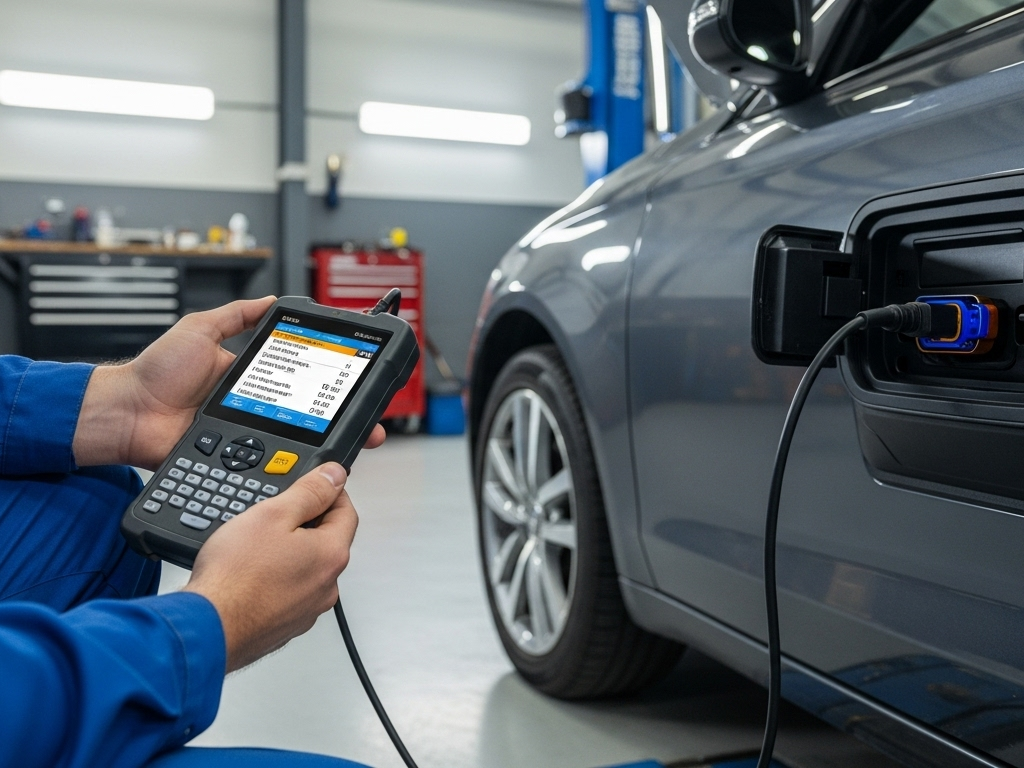
Contemporary electrical auto testing devices are increasingly embracing crucial functionality, especially pertaining to both standard On-Board Diagnostics II (OBD2) functionality and Tire Pressure Monitoring System (TPMS) union. Numerous renewable rides utilize OBD2 ports for displaying fundamental system statistics, enabling technicians and caretakers to recognize potential defects. Furthermore, unified TPMS unification provides exact tire pressure outputs, assisting to optimized protection and diesel effectiveness. This amalgamation of OBD2 interfaces and TPMS applicability demonstrates a remarkable progress in battery-operated motor vehicle examination.
Tire Pressure Frequency Distinctions: Eurasia vs. The US vs. Asia - A Comprehensive Assessment
Those frameworks responsible for measuring tire compression—TPMS—operate on distinct radio spectrum, leading to important regional differences. USA predominantly utilizes 315 MHz, though some contemporary vehicles are switching to 433 MHz. Continental Europe mandates 433.92 MHz, a fixed frequency to maintain coordination across jurisdictions. The East exhibits a intricate landscape, with specific zones using 315 MHz, others 433 MHz, and still some places employing a conglomerate of both. This divergence poses challenges for workshops and car users when dealing with replacement TPMS gadgets or diagnostic tools, demanding careful inspection of regional parameters to banish compatibility issues and promote proper working of the TPMS.
Vehicle Scanners for EV Cars: Tire Info Evaluation & Signal Recognition
Modern vehicle tools are quickly evolving to enable battery-operated cars, notably about wheel pressure monitoring review. Unlike internal combustion engine cars, battery cars present distinct issues when it comes to wheel pressure system testing. Many electric rides use various tire data devices broadcasts requiring the analyzer to exactly translate the signal in use. This functionality allows service personnel to principally check tyre data but also trace the accurate wave being transmitted by the pressure detection transmitters, facilitating in reliable identification of bugs.
Asia TPMS Frequencies: Do You Should Understand?
Navigating the world of machine TPMS can be a problem, primarily due to the varying bands utilized across Europe, Asia, and the United States. Europe's vehicles predominantly use 433.92 MHz, while diverse Asian countries employ 315 MHz and 433.92 MHz, creating a challenging situation for installers. In the US, both 315 MHz and 433.92 MHz are frequently used, with 315 MHz being more substantial. Therefore, understanding these regional divergences is indispensable for accurately handling TPMS issues and selecting the optimal programming tools.
Evolving the Key Concepts: Vehicle Diagnostics, Electronically Powered Rides, & Wheel Pressure System Unit Bandwidth Classification
For professional vehicle experts, simply apprehending the foundations of car scanning, electric motor vehicle structures, combined with pressure monitoring systems unit transmission detection indicates specific vital advanced step. That branches delve through initial troubleshooting, demanding customized tools plus proficiency allowing precisely identify combined with resolve difficult complications connected with tire air, energy network output, or electric motor failure notifications. Additionally, properly locating tire information transmitter channels – that are vary during distinct creators even versions – sometimes required for efficient alignment.
Battery Car Troubleshooting: Using OBD2 Scanners to Troubleshoot TPMS
Examining Tire Pressure Monitoring Systems tire pressure systems in electric vehicles electric autos often includes more than solely visual inspection. Modern OBD2 readers offer significant ability to retrieve TPMS data and detect potential issues. Utilizing these systems, technicians can view fault codes, verify sensor performance, and even trigger sensor checks, allowing for accurate diagnosis of pressure detection problems and minimizing idle time. That is especially essential given the expanding complexity of EV networks.
Handling TPMS Signals: A Practical Briefing for Europe, Asian Subcontinent, and North America
Adequately deploying wheel pressure devices amongst Western Europe, the Asian Region, and North America involves a exhaustive knowledge of the different radio frequencies they work with. Contrary to a common system, each region habitually abides by specific frequency ranges. Such as Western Europe mostly bases on three hundred fifteen MHz and 433.92 MHz band, while the Continent normally over-the-air verification operates on 315 MHz though a few recent models are able to carry 433.92 MHz. Eastern Asia presents a greater multiplicity situation, with a range of frequency ranges practiced, depending on the state and vehicle manufacturer.
- Ponder local regulations regarding radio wave.
- Consult your car's handbook for precise band.
- Use a gauge reader equipped for evaluating various waves.