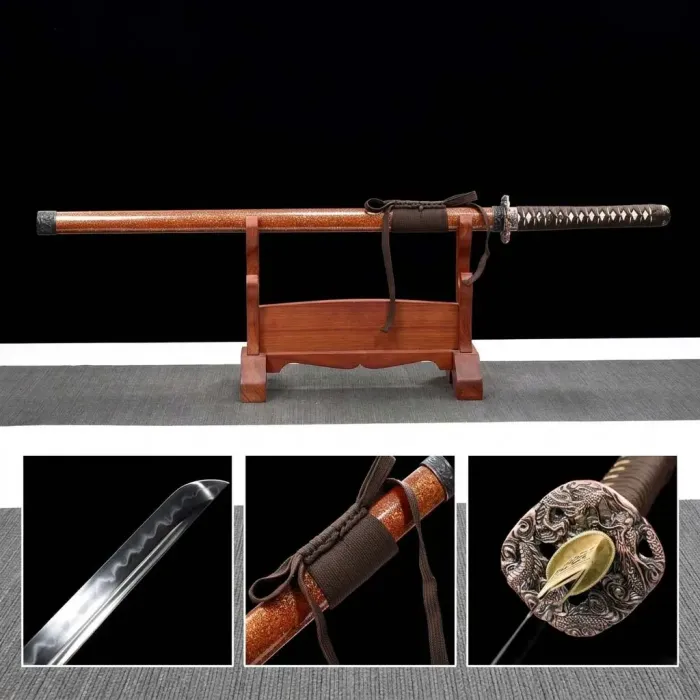
The traditional ancient blade functions as a beautiful example of fabrication, but how about you strive for to express your own mode? Adapting your instrument is a deep journey, allowing you to design a truly uncommon piece. From the grip wrapping and fastening to the tsuba design and edge design, each constituent offers a chance for custom touch. This inquiry delves into the world of katana customizations, providing tips for both beginners and proficient enthusiasts searching to form their impression on the time-honored art of the samurai.
Freshman's True Artistry
For enthusiasts determined to embark on the rewarding journey of classical sword techniques , 1060 steel katanas extend an first-rate entry point. This particular grade of tool steel balances a ideal mix between budget-friendliness and performance . While never as hard as top-tier steels, 1060 supports a suitable level of cutting preparation , making it suited for initiates to improve the fundamentals of blade care and experience the grace of handcrafted Japanese weaponry. It’s a great choice for gaining experience without the investment burden of more specialized steels.
T-10 Steel Edges : Achieving Effectiveness and Cost
To help hobbyists seeking an authentic armament experience without overwhelming the capital constraint , T10 substance katanas represent a beneficial option. These daggers offer a marked improvement in resilience compared to basic alternatives, exhibiting respectable edge retention and enough flexibility for fundamental slicing techniques. While not rivaling the exquisite characteristics of ultimate steels like T100 or folded iron , T10 provides a notable blend of ability and value , making them a appreciated choice for rookies and those on a fixed budget .
Going past the Keel : Adapting Your Sword's Attachments and Haft
Despite the polished metallic edge is undeniably the core point of a katana, truly refining its magnificence lies in the deliberate customization of its hardware and grasp . This method allows enthusiasts to manifest their individual style . Review the wide possibilities: menuki - decorative embellishments that add visual charm ; the hamon sleeves – often elaborately crafted ; the tsuka basis itself, wrapped in classic ito rope ; and the fusa pommel , which can be fabricated from various substances like ingots or bone .
- Decide on motifs that relate with you.
- Try with multiple materials .
- Stress merit for a permanent result .
The Fascination of the Katana: Origins, Mastery, and Material
Each Japanese sword contains a incomparable allure, steeped in ages of oriental history and practice . More than merely a tool of conflict , it's a mark of the samurai ethos – a fusion of mastery and governance . Its expansion spanned several generations, with early steel evolving into the polished curvature and precise edge we understand today. The artistry involved is truly exceptional , requiring spans of coaching to master . The process involves a intricate folding of refined metal , creating layers that reinforce the instrument’s flexibility and slicing ability. Multiple schools of blacksmithing appeared , each with their special secrets and formulas for achieving the ideal balance and keenness - a truly demanding pursuit.
- Primary Katana types
- The part of the cutting armament in knight culture
- Conventional forging techniques
Picking the Appropriate Steel for Your Cutting Tool Project: 1060 vs. T10
Opting for the ideal steel is vitally important for any cutting weapon project, and the determination between 1060 and T10 can be challenging. 1060 is a widely used American alloy, offering a decent balance of strength and toughness, making it appropriately easy to manage. However, T10, a Far Eastern steel, ordinarily boasts increased wear durability and can conceivably achieve a more ultimate hardness, although it can be more tough to treat and requires thorough heat conditioning. Consider your expertise and intended goals: for a learner, 1060 may be a clearer basis, while the skilled smith might use the expanded characteristics of T10.
- Effortlessness of Handling
- Longevity
- Terminal Tenacity
Accessing Excellence: Progressive Katana Alteration Approaches
Developing mastery in sword customization extends far beyond basic sharpening. Serious connoisseurs are now probing advanced techniques to truly reveal a blade's hidden potential. This demands intricate work with the quenching mark, utilizing specialized materials for differential condition and carefully determining the design of the defense plate to optimize balance and performance. Beyond purely functional customizations, artisans are increasingly focused on producing unparalleled aesthetic magnificence, through complex incising and layered varnishes that truly transform a katana into a showpiece.
Shaping Rough Steel into Perfection: Making a 1060 Sword
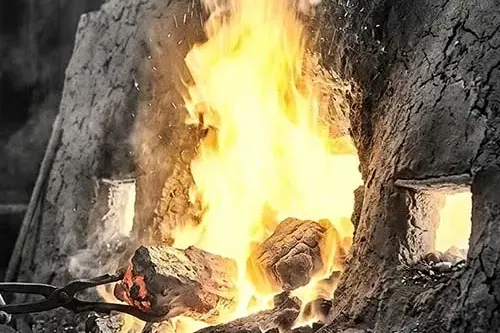
The journey begins with regular 1060 steel , a hard material far from the sophisticated katana it will develop into. Expert bladesmiths perform a complicated process of overlaying and molding the initial steel, repeatedly heating it and forging it to purify impurities and form a balanced grain structure. This tedious process, often persisting for cycles, builds the essential sturdiness and ductility characteristic of a authentic Japanese cutlery . Follow-up heat methods , including meticulous hardening and resting, are vital to achieve katana sword the preferred equipoise of sharpness, durability and grace .- Combining: Diminishes impurities and creates grain structure.
- Molding: Molds the steel into the initial blade form.
- Hardening: Directs the final hardness and flexibility.
The Everlasting Fascination of the Katana: Broad Investigation of Metalcraft and Adjustment
Every traditional katana stays a captivating symbol embodying Japanese custom , its enticement far beating mere weaponry . Forged from tamahagane steel and frequently featuring intricate embellishments , the practice of creation itself is a hallowed art. Beyond the crucial craftsmanship, the ability to adapt a katana - from the edge marking to the shaft wrapping and fitting - provides for a honestly individual exhibition for both curators and participants alike. This confluence of classical steelwork and boundless personalization creates the katana's continued widespread acceptance across the universe.